The language of rights—right to vote, right to education, right to work, equality before law—feels so natural today that it is often retroactively projected onto the past. Yet, historically speaking, rights-based citizenship is a modern construct, not a timeless human condition. A closer look at monarchies, ancient societies such as Vedic India, early democracies, and modern welfare states reveals a far more complex and uneven evolution.
Rights Were Absent in Monarchical Worlds
For most of recorded history, societies were organised under monarchical or hierarchical systems, where people were subjects, not citizens. Authority flowed downward from kings, emperors, or divine sanction—not upward from the people.
In such systems:
Entitlements were privileges granted by rulers, not enforceable rights.
Governance was duty-based (what the ruler ought to do), not rights-based (what people could demand).
Equality before law did not exist; status depended on birth, gender, caste, or estate.
Whether in medieval Europe, imperial China, or ancient India, the idea that an individual could legally claim something from the state as a matter of right was largely absent. Even benevolent rulers could withdraw favours at will. What could be granted by grace could not be demanded as a right.
Vedic India: Respect, Participation, but Not Equality
It is often claimed that women enjoyed almost equal rights in Vedic India. Historically, this claim is partially true but frequently overstated.
In the early Vedic period, some women—mostly from elite backgrounds—did enjoy notable social and intellectual space:
Women such as Gargi and Maitreyi participated in philosophical debates.
Female seers (rishikas) composed hymns in the Rig Veda.
Women took part in religious rituals and yajnas.
Marriage practices were relatively flexible compared to later periods.
However, this did not amount to equality:
Society remained patriarchal and patrilineal.
Political authority and inheritance were male-dominated.
There was no concept of legal or universal rights.
Exceptional women did not represent the average woman’s condition.
By the later Vedic period, women’s status declined further, with reduced access to education and greater social restrictions. Thus, while early Vedic society offered women more space than many later societies, it was not egalitarian, and certainly not rights-based in the modern sense.
Voting Rights: A Radically Modern Idea
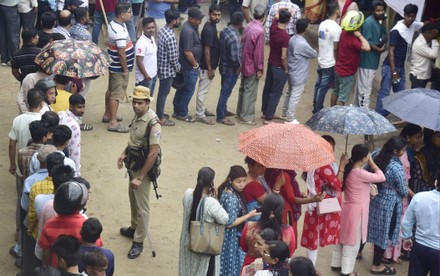
Another widespread misconception is that voting has always been a natural democratic right. In fact, universal adult suffrage is a 20th-century innovation.
Historically:
Women were excluded from voting almost everywhere.
Voting was restricted to property owners, tax-payers, or educated males.
Early democracies feared “mob rule” and believed only those with a “stake in society” should vote.
This was not a fringe belief. Influential thinkers such as Aristotle, John Locke, Rousseau, Montesquieu, Madison, and Edmund Burke either explicitly or implicitly justified restricted political participation. Even reformers like John Stuart Mill opposed universal suffrage, advocating plural voting based on education.
Universal voting rights emerged only after:
Industrialisation
Mass literacy
Labour movements
Women’s movements
World wars that demanded citizen sacrifice
Seen in this light, India’s adoption of universal adult franchise in 1950 was historically radical, not inevitable.
Europe and the Rise of Social Citizenship
Modern European democracies did not primarily expand rights through courts or declaratory laws. Instead, they developed a model of social citizenship, especially after World War II:
Education, healthcare, unemployment support became universal entitlements
Welfare was framed as a right of citizenship, not charity
Strong institutions ensured delivery, reducing reliance on litigation
This contrasts with countries like India, where rights-based legislation (RTI, RTE, MGNREGA) was used as a corrective mechanism to compensate for weaker administrative capacity.
The Modern Turn: Rights as Legal Entitlements
The rights-based approach reached its most explicit form in the modern era, particularly in constitutional democracies. In India, the UPA governments under Dr Manmohan Singh institutionalised this approach through:
Right to Information
Right to Education
Right to Work (MGNREGA)
Right to Food
These laws reframed citizens as rights-holders and the state as a duty-bearer, marking a sharp break from both monarchical paternalism and discretionary welfare.
Debates today about the dilution or reconfiguration of these rights reflect not a historical norm, but a political choice within modern governance.
Conclusion: History Offers Perspective, Not Nostalgia
History does not support the idea that societies naturally moved from equality to inequality. Rather, it shows the opposite:
Rights expanded slowly, unevenly, and through struggle
Women’s equality, universal suffrage, and social rights are recent achievements
Pre-modern societies operated on duty, hierarchy, and privilege—not citizenship
A historically grounded understanding reminds us that modern rights are neither ancient inheritances nor cultural givens. They are fragile, contested, and continuously renegotiated, shaped by political will as much as by social change
Warning: Trying to access array offset on value of type null in /home/truevigy/public_html/wp-content/plugins/elementor/includes/base/controls-stack.php on line 1627
Warning: Trying to access array offset on value of type null in /home/truevigy/public_html/wp-content/plugins/elementor/includes/base/controls-stack.php on line 1629