
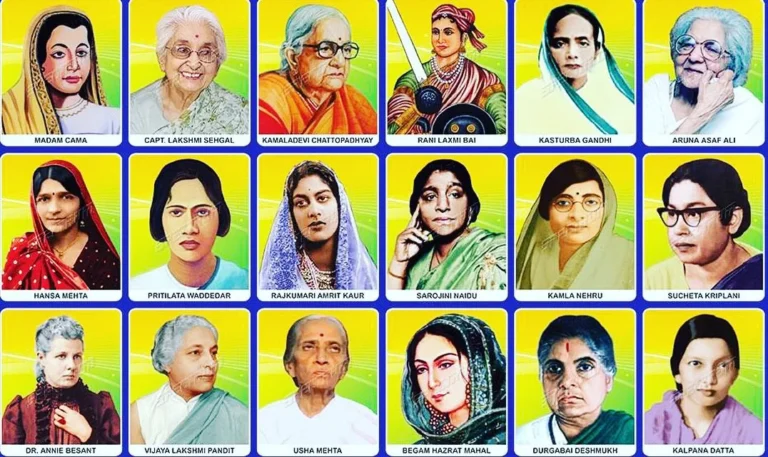
he story of women empowerment in India since independence is one of gradual transformation, constitutional reform, social struggle, and democratic expansion. From receiving equal voting rights at the birth of the Republic to the contemporary debate over the Nari Shakti Vandan Adhiniyam 2023, India’s journey reflects a larger global pattern also visible in Europe and West Asia: rights are often granted first, education expands next, economic participation follows, and social attitudes evolve last.
India’s progress has been real, but never linear. Every phase of women empowerment has also involved political contestation, institutional delays, and deeper debates over power.
1. Independence and the Constitutional Revolution (1947–1950)
When India became independent in 1947, women had participated in the freedom struggle, yet most continued to face social inequality, limited education, economic dependence, and patriarchal customs.
A major breakthrough came with the Constitution of India coming into force.
Unlike many Western nations where women had to struggle separately for suffrage, Indian women received universal adult franchise from the beginning. Women became equal political citizens overnight.
The Constitution of India guaranteed:
- Article 14 – Equality before law
- Article 15 – No discrimination on grounds of sex
- Article 15(3) – Special provisions for women permitted
- Article 16 – Equal opportunity in public employment
This was among the most progressive democratic starts of the 20th century.
2. Nehru Era Legal Reforms (1950s–1960s)
Under Jawaharlal Nehru, the state attempted to modernise family law and improve women’s legal status.
Major reforms included:
- Hindu Marriage Act 1955
- Hindu Succession Act 1956
- Hindu Adoptions and Maintenance Act 1956
- Maternity Benefit Act 1961
These improved rights related to marriage, divorce, inheritance, maintenance, and labour welfare.
Though limited in reach at first, they laid the legal foundation for future empowerment.
3. Education and Social Change (1960s–1990s)
The next decisive force was education.
As girls entered schools and colleges in larger numbers, the effects were transformative:
- Delayed marriage age
- Improved health outcomes
- Greater workforce participation
- Rising aspirations
- Smaller family sizes
Government programmes and expanding public education helped millions of women gain access previously denied.
This mirrors the historical experience of Europe earlier, where women’s education accelerated social modernisation, and later trends in parts of West Asia where female literacy surged alongside development.
4. Women in Politics: The Grassroots Revolution (1992–1993)
A landmark turning point came with the 73rd and 74th Constitutional Amendments, which reserved seats for women in Panchayats and Urban Local Bodies.
This changed Indian democracy at the village and municipal level.
Millions of women entered governance for the first time, proving that political leadership was not confined to elite or urban spaces.
The local governance experiment demonstrated three lessons:
- Women could govern effectively
- Representation changes priorities toward welfare and development
- Institutional access matters more than symbolic praise
This success later inspired demands for reservation in Parliament and State Assemblies.
5. Women’s Reservation Bill: A Three-Decade Constitutional Journey
The demand for legislative reservation did not emerge suddenly.
Timeline
- 1996 – Women’s Reservation Bill first introduced
- 1998, 1999, 2003 – Reintroduced but stalled
- 2010 – Passed in Rajya Sabha, lapsed in Lok Sabha
- 2023 – Passed as Nari Shakti Vandan Adhiniyam 2023
- 2026 – Debate continues on implementation, delimitation, and political consequences
Thus, what appears as a fresh reform is actually the culmination of a 30-year democratic struggle.
6. Why the Nari Shakti Bill Is Celebrated
The bill seeks to reserve 33% seats for women in the Lok Sabha and State Assemblies.
It is praised for three reasons:
Correcting Underrepresentation
Women remain underrepresented in legislatures despite being nearly half the population.
Deepening Democracy
Greater participation may shift priorities toward:
- Health
- Education
- Safety
- Welfare
- Human development
Proven Success at Local Level
Panchayat reservations already showed women can lead effectively when institutions create space.
7. Why the Debate Continues: Delimitation and Trust Deficit
The core controversy is not women’s reservation itself, but when and how it will be implemented.
The law links implementation to:
- Future Census
- Delimitation exercise
- Rotation of reserved constituencies
This creates political uncertainty.
Some opposition parties argue that a reform announced today but dependent on future boundary changes resembles a contract whose real terms are known only later.
Their concern is simple:
Today’s moral reform may become tomorrow’s electoral disadvantage.
8. Federal Balance: North–South Concerns
Delimitation reallocates seats according to population.
If done strictly on demographic lines, faster-growing northern states such as:
- Uttar Pradesh
- Bihar
- Rajasthan
- Madhya Pradesh
could gain parliamentary weight relative to slower-growing southern states such as:
- Tamil Nadu
- Kerala
- Karnataka
- Andhra Pradesh
This has produced a federal concern:
States that successfully controlled population growth may lose relative political influence.
Thus, the women’s reservation debate is tied to India’s wider federal structure.
9. Design Criticisms
Even supporters acknowledge unresolved issues:
- Delayed implementation – promised now, delivered later
- Rotation of constituencies – may weaken accountability
- No OBC sub-quota – concern of unequal distribution within women’s reservation
- Centralised ticket selection – party leadership may gain more control
- Symbolism risk – structural barriers may continue if deeper reforms lag
10. India in Global Perspective: Parallel with Europe and West Asia
India’s trajectory resembles broader international patterns.
Europe
Women first gained suffrage, then entered education, labour markets, and eventually top political offices.
West Asia
Many countries saw state-led reforms, rising education levels, and gradual labour participation, though unevenly across nations.
India
The sequence has been similar:
Political rights → education → economic participation → social transformation → demand for fuller representation
This suggests women empowerment globally tends to move in stages rather than through one sudden revolution.
11. The Road Ahead
The next phase of women empowerment in India depends on:
- Effective implementation of reservation reforms
- Higher female workforce participation
- Safety in public and private spaces
- Property ownership and financial inclusion
- Better health and nutrition outcomes
- Stronger representation across caste and class lines
- Cultural change within households
Conclusion
Women empowerment since independence has been one of India’s greatest democratic achievements. From equal voting rights in 1950 to the contemporary struggle for legislative representation, the journey reflects both progress and complexity.
The Nari Shakti Vandan Adhiniyam 2023 is not the beginning of women empowerment, nor its final destination. It is the latest chapter in a long constitutional story.
If implemented wisely—with sensitivity to caste justice, federal balance, and institutional trust—it could become a landmark of democratic renewal.
If mishandled, it may become another example of India promising progress while postponing consequences.
Either way, the rise of India remains inseparable from the rise of its women.