
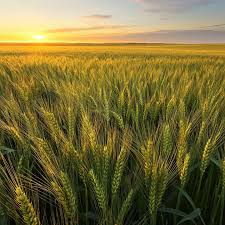
Agriculture in India is not merely an economic activity; it is a civilisational foundation. From the fertile Indo-Gangetic plains to the black soils of the Deccan Plateau, Indian agriculture reflects a complex interaction between climate, soil, water, crops, technology, and human adaptation. To understand agriculture properly, one must move beyond the simplistic idea that crops grow merely because seeds are planted in soil. In reality, every successful agricultural system is the outcome of ecological balance, scientific management, and regional suitability.
At the heart of Indian agriculture lies the diversity of crops and seasons. India broadly follows three agricultural seasons: Kharif, Rabi, and Zaid. Kharif crops are monsoon crops sown during June and July and harvested in autumn. These include Rice, maize, cotton, soybean, and millets. Rabi crops, by contrast, are winter crops grown between October and April, the most important being Wheat, mustard, gram, and barley. Zaid crops occupy the short summer window between the two main seasons and include fruits and vegetables such as watermelon and cucumber. This seasonal diversity allows India to sustain one of the largest agricultural systems in the world.
The geographical spread of crops across India is deeply influenced by climate and soil. Rice dominates eastern and coastal regions because it requires abundant water and humid conditions. Wheat thrives in the northwestern plains where cooler winters and irrigation systems support high productivity. Cotton is traditionally associated with black soils of the Deccan Plateau, while plantation crops such as tea and coffee flourish in the hill regions and high-rainfall zones of southern and northeastern India.
Soil itself forms the backbone of agriculture. India possesses several major soil categories, each with distinct characteristics. Alluvial soils of the Indo-Gangetic plains are among the most fertile soils in the world. Formed by river deposits over centuries, they are rich in minerals and ideal for crops such as rice, wheat, and sugarcane. Black soils, found largely in Maharashtra and Madhya Pradesh, are clay-rich and highly moisture-retentive, making them suitable for cotton. Red soils, common in southern India, are rich in iron but relatively poor in nutrients and therefore require fertiliser support. Laterite soils of high-rainfall regions are acidic and heavily leached but suitable for plantation crops such as tea, coffee, and rubber.
The relationship between soil and crop is highly scientific. Crops are not randomly distributed across landscapes. Cotton performs well in black soil because the clay retains moisture for long periods. Rice benefits from water-retaining alluvial or clayey soils, while tea prefers acidic hill soils. Yet modern agriculture has shown that crop suitability is not entirely fixed by nature. Through irrigation, fertilisation, drainage engineering, and scientific management, humans can increasingly alter local conditions to grow crops beyond their traditional zones.
For example, growing wheat or rice on black soil is entirely possible, although it requires modifications. Black soil becomes sticky when wet and hard when dry. Therefore, drainage systems, land levelling, organic matter addition, and carefully managed irrigation are essential. Wheat particularly requires well-aerated root conditions, while rice cultivation on black soil may demand zinc supplementation and controlled water management. The objective is not to transform black soil into alluvial soil, but to engineer the soil environment so that wheat and rice can function effectively within it.
Another essential pillar of agriculture is fertilisation. Plants require nutrients just as humans require balanced diets. The primary nutrients are nitrogen, phosphorus, and potassium, commonly known as NPK. Nitrogen promotes leaf and vegetative growth, phosphorus strengthens roots and flowering, while potassium improves disease resistance and grain quality. In addition to these macronutrients, crops also require secondary nutrients such as sulphur and micronutrients such as zinc, boron, and iron.
However, agriculture does not function on the principle that “more fertiliser means better crops.” Different crops require different nutrient balances. Rice and wheat need high nitrogen support, pulses require comparatively less nitrogen because they naturally fix atmospheric nitrogen, while bananas and potatoes require higher potassium levels. Excess fertiliser application can damage plants, disrupt nutrient absorption, degrade soil structure, and pollute groundwater. Modern agronomy therefore emphasises balanced fertilisation rather than indiscriminate fertiliser use.
This understanding has led to the rise of Integrated Nutrient Management, where chemical fertilisers are combined with organic manures and biofertilisers. Farmyard manure, compost, vermicompost, and green manuring improve soil structure and microbial life, while biofertilisers such as Rhizobium bacteria help naturally fix nitrogen. Increasingly, agriculture is moving toward precision nutrient management based on soil testing and scientific crop requirements.
The comparison between Indian agriculture and other global agricultural systems reveals further complexities. Ukraine, for instance, is famous for its chernozem or “black earth” soil, one of the world’s naturally richest cereal-growing soils. Yet this black earth is very different from India’s black cotton soil. Ukrainian chernozem is rich in humus and organic matter, formed under temperate grasslands, while Indian black soil is clay-heavy and moisture-retentive. Although both support agriculture, India’s wheat success depends much more on irrigation, fertilisers, and intensive management, particularly after the Green Revolution.
Agricultural scientists have also explored whether productive soils can be transferred from one region to another. Small-scale soil transport has historically occurred through the movement of fertile river silt, pond sediments, and topsoil. Yet modern science recognises that soil is not merely inert material. It is a living ecosystem containing microorganisms, fungi, organic matter, and dynamic chemical processes. Transporting soil alone does not recreate the climate, water systems, and ecological conditions that originally made it fertile. Consequently, modern agriculture focuses less on transporting soil and more on reproducing desirable soil characteristics through organic matter addition, nutrient balancing, microbial enhancement, and soil engineering.
This raises a fascinating larger question: can deserts be transformed into fertile agricultural plains similar to the Indo-Gangetic region? Scientifically, the answer is partly yes. Countries such as Israel have demonstrated advanced desert agriculture through drip irrigation, desalination, and precision farming. In India, the Indira Gandhi Canal transformed parts of Rajasthan into productive farmland. Yet creating Gangetic-like fertility across deserts would require immense water resources, energy, soil-building efforts, and salinity management.
The Indo-Gangetic plains owe their fertility to continuous river sediment deposition, monsoon systems, deep alluvial soils, and abundant water. Replicating such a naturally evolved ecosystem artificially on a continental scale would be enormously difficult and expensive. Modern agriculture therefore increasingly focuses not on converting entire deserts into fertile plains, but on creating carefully engineered agricultural corridors using irrigation, nutrient management, drought-resistant crops, and advanced technologies.
The future of Indian agriculture lies at the intersection of traditional ecological wisdom and modern scientific innovation. Precision irrigation, AI-driven nutrient mapping, nano fertilisers, hydroponics, and microbial soil engineering are gradually reshaping agricultural thinking. Scientists now increasingly understand that agriculture is not simply about soil and seeds, but about managing a living ecological system in balance with climate, water, biology, and human need.
Ultimately, the ABC of agriculture in India is the story of adaptation. It is the story of how geography shapes crops, how science reshapes geography, and how civilisation continuously negotiates with nature in order to sustain food, livelihoods, and national stability.